How to tell a black widow from every other spider in your garage
The identification takes about four seconds once you know what you are looking at. What comes after it is the part most people get wrong.
September 1, 2026 · 3 min read
Every spider carries some level of toxicity in its bite. Almost none of them matter to you. In northern Utah there is one that does, and it is common enough around Lehi, Highland and American Fork that most homeowners have shared a garage with one at some point without knowing it.
What you are actually looking for
A black widow is jet black, and it is glossy rather than matte. The marking everybody knows about, the red hourglass, sits on the inside of the abdomen, which means you usually see it when the spider is hanging upside down in its web. That is worth knowing, because people go looking for a red mark on a spider's back and never find one.
The web is the better tell, honestly, because you will find webs long before you find spiders. A black widow's web has no pattern to it. There is no neat wheel, no orderly spokes, just a tangle that looks like somebody balled up fishing line and left it in a corner. It is also unusually strong. If you push a twig through an orb weaver's web it tears. If you push a twig through a widow's web it stretches first, and you can hear it break.
Where they turn up around a Utah house
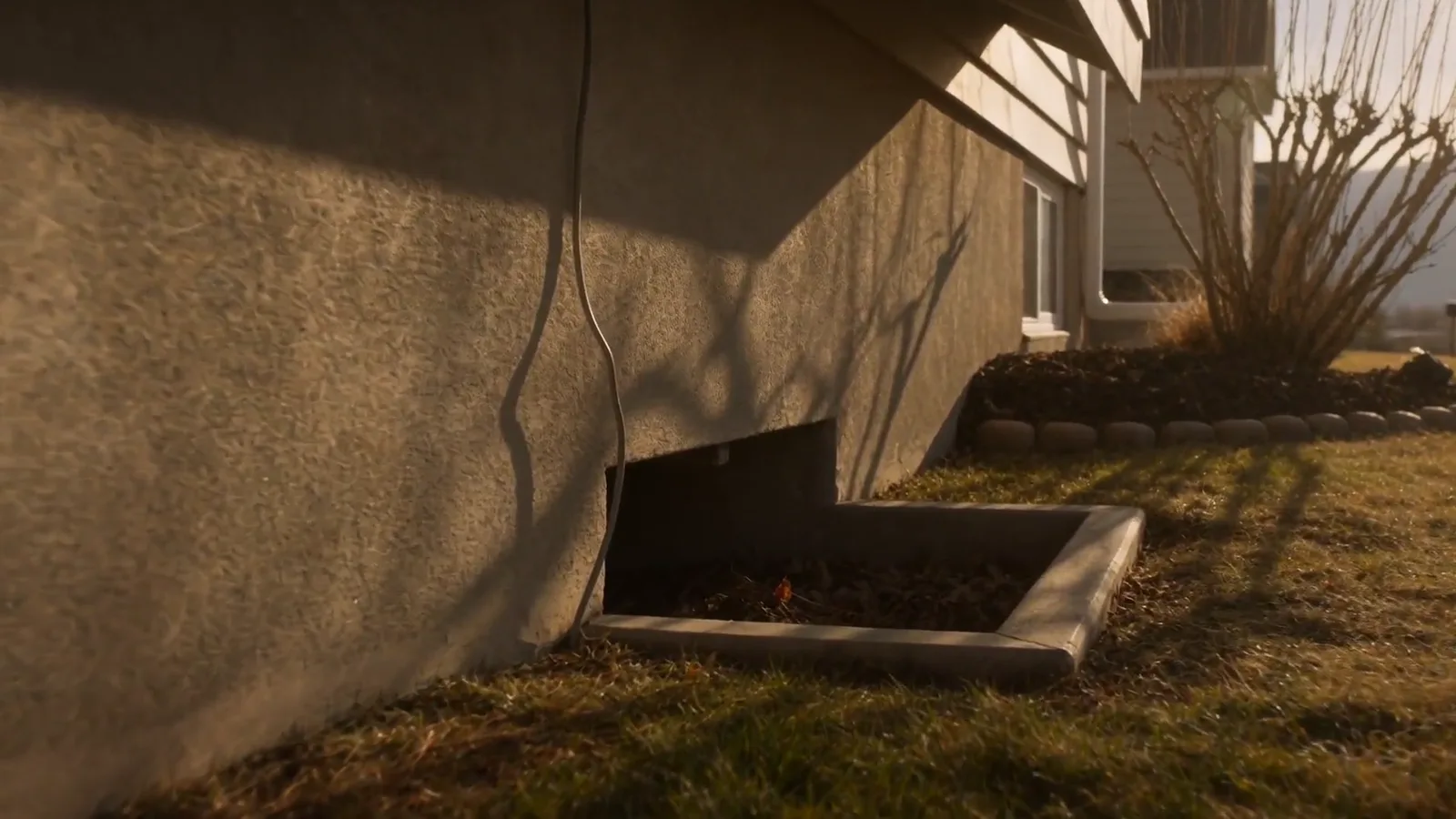
- Window wells, especially ones that collect leaves and stay undisturbed
- The underside of deck framing and stair treads
- Behind and beneath anything stored against an exterior wall
- Retaining walls and the gaps between block or stone
- Garages, particularly in corners near the floor and around stored boxes
The pattern behind that list is undisturbed and sheltered. Widows are not hunting you and they are not roaming the house. They sit on the web and wait, which is exactly why they end up in the places you visit twice a year.
Why they spread the way they do
Widows disperse by hatching and then ballooning. A tiny spiderling puts out a strand of silk, catches the breeze, and uses it more or less like a hot air balloon. It lands wherever it lands. That is how you can clear a garage completely and find new ones around the house a few weeks later without anything having walked there.
It also explains the thing that frustrates people most. A widow will build a web on a surface that has just been sprayed. She is not walking through the product the way a foraging ant does, because she barely moves at all once the web is up. So a single treatment can be applied perfectly and still be followed by a new web in the same corner.
So what actually works
Two things, and they only work together. The first is correct identification, so the treatment matches the spider rather than a general assumption about spiders. The second is going back. Frequent retreatment is what keeps widows outside, because it catches each new arrival before she is established, and no single visit can do that when the population is arriving by air.
That is the reasoning behind unlimited free retreatments between scheduled services at Nature's Way. It is not a sales feature bolted onto the price. For this particular spider, the return visit is the treatment.
Why it matters more than a nuisance spider
Black widows produce a neurotoxin. A bite causes severe cramping, and it is genuinely dangerous for young children and for elderly people. That is a different risk category from a wolf spider in the basement, and it is the reason this one is worth treating properly rather than vacuuming up and hoping.
If you have found a jet black spider with a red hourglass, or a tangled unpatterned web you can hear break, that is worth a call rather than a broom. Emergency service is available, and a free FaceTime inspection means you can show somebody the web without waiting for an appointment or getting anywhere near it.
One more practical note. Do not clear the web before somebody has seen it. Where a widow has built, and how the web is anchored, tells a technician a great deal about how long she has been there and where the rest of them are likely to be.
Nature's Way Pest Solutions — (801) 513-4106
Call (801) 513-4106More articles
Why spraying the ants on your counter makes the problem worse
The ants that come back after a kitchen spray are usually not the same ants. They are the rest of the colony, relocated.
Next spring's infestation is being decided right now
By the time you see anything in April, the decision that produced it was made months earlier.